2026 Housing Market Forecast
2026 Housing Market Forecast
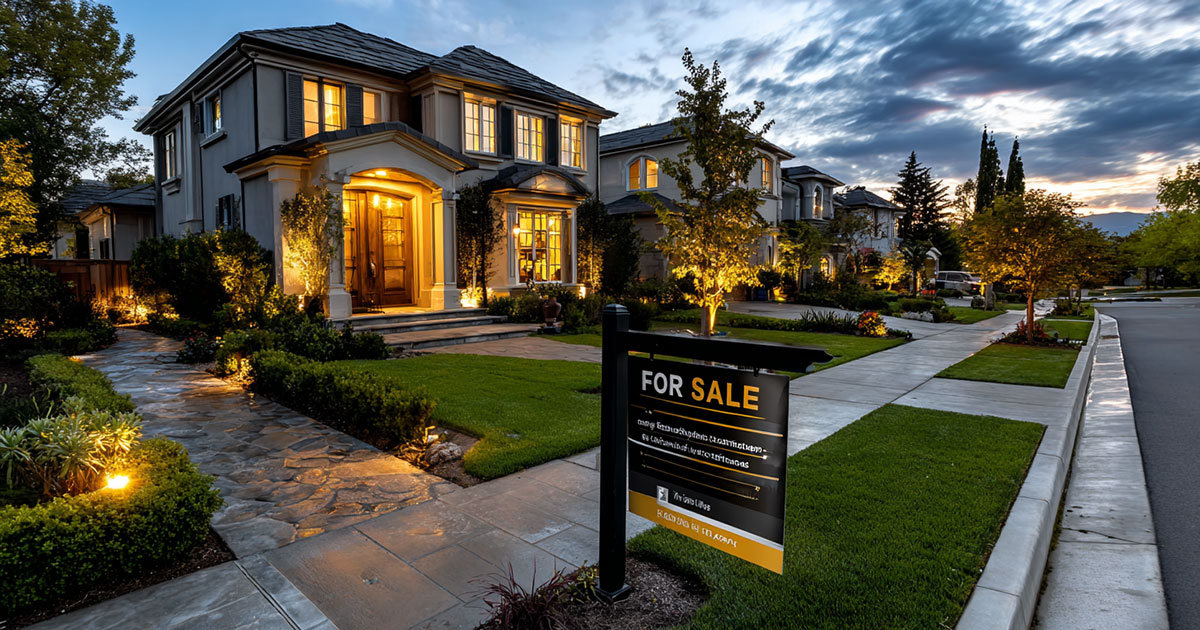
The United States housing market in late 2025 presents a complex dilemma for prospective homeowners weighing the benefits of current mortgage rates against 2026 projections. While home prices are expected to rise steadily and interest rates stabilize near six percent, waiting for a significant market correction could prove costly as inventory remains tight and competition intensifies throughout the coming year.
Market Landscape
As we approach the end of 2025, the American real estate environment is undergoing a subtle yet profound transformation that challenges the traditional strategies of both buyers and sellers. After a period of significant volatility driven by aggressive Federal Reserve policies, the market has entered a phase of relative stabilization that many experts are calling the new normal. The recent series of modest interest rate cuts has finally begun to thaw the frozen inventory levels that characterized the previous two years, yet the surge in supply has not been the overwhelming flood that some predicted. Instead, we are seeing a measured increase in listings as homeowners who were previously locked into low rates finally decide that lifestyle changes outweigh the benefit of keeping their three-percent mortgages. This shift creates a unique psychological landscape where the urgency of the post-pandemic era has been replaced by a more calculated, albeit cautious, optimism. For those navigating this terrain, the primary question is no longer whether the market will crash, but rather how to position oneself before the anticipated spring rush of 2026. The current stability provides a rare window of transparency where buyers can evaluate properties without the extreme pressure of multiple-offer scenarios that often lead to poor decision-making and buyer’s remorse.
Pricing Trajectory
The forecast for home prices in 2026 indicates a continued upward trend, albeit at a more sustainable pace than the explosive growth seen in the early 2020s. Leading economic indicators and housing analysts suggest a national appreciation rate of approximately two to three percent over the next twelve months. While this might seem modest compared to previous double-digit spikes, it represents a return to historical averages that favor long-term wealth building over short-term speculation. The persistence of price growth is fundamentally rooted in the structural deficit of housing units across the country, a problem that cannot be solved overnight regardless of interest rate movements. Potential buyers waiting for a dramatic drop in prices are likely to be disappointed, as the combination of millennial household formation and the entrance of Generation Z into the market provides a solid floor for demand. In many high-growth regions, particularly in the tech and energy hubs of the Sun Belt and the revitalized industrial centers of the Midwest, price appreciation may even exceed national averages due to localized economic strength and migration patterns. Consequently, entering the market now allows a buyer to capture that next wave of equity growth rather than paying a premium a year from now for the same square footage.
Financing Dynamics
Mortgage rates have dominated the housing conversation for years, and as we look toward 2026, the era of extreme fluctuation appears to be tapering off. Current rates, hovering in the low six-percent range, are significantly more attractive than the peaks seen in 2023 and 2024, yet they remain high enough to deter some casual participants. The consensus among financial institutions is that rates will likely remain within the six to six-and-a-half percent bracket for the foreseeable future, as the Federal Reserve maintains a balanced approach to inflation management. This stability is actually a boon for the market, as it allows for better long-term planning and reduces the “wait and see” paralysis that gripped the industry when rates were rising rapidly. Savvy buyers are increasingly adopting the “date the rate, marry the house” philosophy, recognizing that a home purchased today can be refinanced if rates drop significantly in the future, but the purchase price is fixed the moment the contract is signed. Waiting for the elusive return of three-percent rates is increasingly viewed as a losing strategy that ignores the reality of the current economic cycle. By securing financing now, buyers can lock in their monthly housing costs in an inflationary environment, effectively using their mortgage as a hedge against rising living expenses.
Supply Constraints
The inventory narrative remains the most significant hurdle for the 2026 housing market, as the United States continues to grapple with a multi-million unit shortage. While new construction has seen an uptick in late 2025, builders are still facing challenges related to land availability, labor shortages, and regulatory hurdles that prevent them from meeting the full breadth of consumer demand. This scarcity ensures that even as more resale homes hit the market, the overall supply remains historically tight, keeping the bargaining power largely in the hands of sellers in many desirable school districts and urban cores. The dynamic of the “lock-in effect” is slowly dissipating, but it has not vanished entirely, meaning that many potential move-up buyers are still hesitant to list their current homes until they are certain of their next acquisition. For a buyer in today’s market, this means that while there is more choice than there was a year ago, the best-maintained and most fairly priced homes still sell quickly. Taking advantage of the current winter lull, when competition is seasonally lower, might be the most effective way to bypass the supply crunch before the 2026 spring season brings a fresh wave of motivated buyers back into the fold.
Opportunity Costs
When analyzing whether to buy now or wait for 2026, one must consider the substantial opportunity cost associated with delaying a purchase. Every month spent waiting is a month of paying rent—an expense that offers zero return on investment—while simultaneously missing out on the principal pay-down and tax benefits associated with homeownership. If we apply the projected two percent price appreciation to a median-priced American home, a buyer who waits twelve months could find themselves paying nearly ten thousand dollars more for the exact same property, in addition to the thousands of dollars lost to rent. Furthermore, the competitive landscape in 2026 is expected to be more crowded as lower rates draw back those who have been sidelined for years, potentially leading to the return of bidding wars and the waiving of essential contingencies like inspections and appraisals. By acting in the current climate, buyers have more leverage to negotiate for seller concessions, such as rate buy-downs or repair credits, which often provide more financial value than a minor fluctuation in the base interest rate. The mathematical reality often favors the immediate purchase for those who are financially prepared and plan to stay in the home for at least five to seven years.
Final Verdict
Ultimately, the decision to enter the housing market as 2025 draws to a close should be based on personal financial readiness rather than an attempt to perfectly time the bottom of a market cycle. The transition into 2026 promises a market defined by steady growth, manageable interest rates, and a persistent but slowly improving inventory of homes. While the “goldilocks” moment of high supply and low prices is unlikely to materialize, the current environment offers a level of predictability that has been missing for half a decade. Sellers should recognize that their properties are still highly valued assets in a supply-constrained world, while buyers should focus on the long-term wealth-building potential of real estate rather than short-term interest rate movements. The most successful participants in the 2026 market will be those who recognize that the best time to buy a home is when they have found the right property at a price they can afford, regardless of what the headlines suggest. Waiting for the “perfect” moment often leads to missing the “good” moment, and in the world of American real estate, the cost of hesitation is almost always higher than the cost of action.
Dale Rhodes
Rhodes Real Estate LLC
119 Oak Sq S Lakeland, Fl. 33813
Email: rdrmanofhonor@gmail.com
Phone: (321) 917-6596, 321-917-6596
Welcome to the Web Site for Rhodes Real Estate. We are a Veteran Owned Company. Our priority is putting YOU first! We will answer your phone calls or call you back same day. We will always treat you like a VIP. We will make sure you are informed about your listing or your search by sending you an email every week. At Rhodes Real Estate YOU are what we put first. I hope that you will call me and experience the Rhodes Difference. Your road to success begins with RHODES.